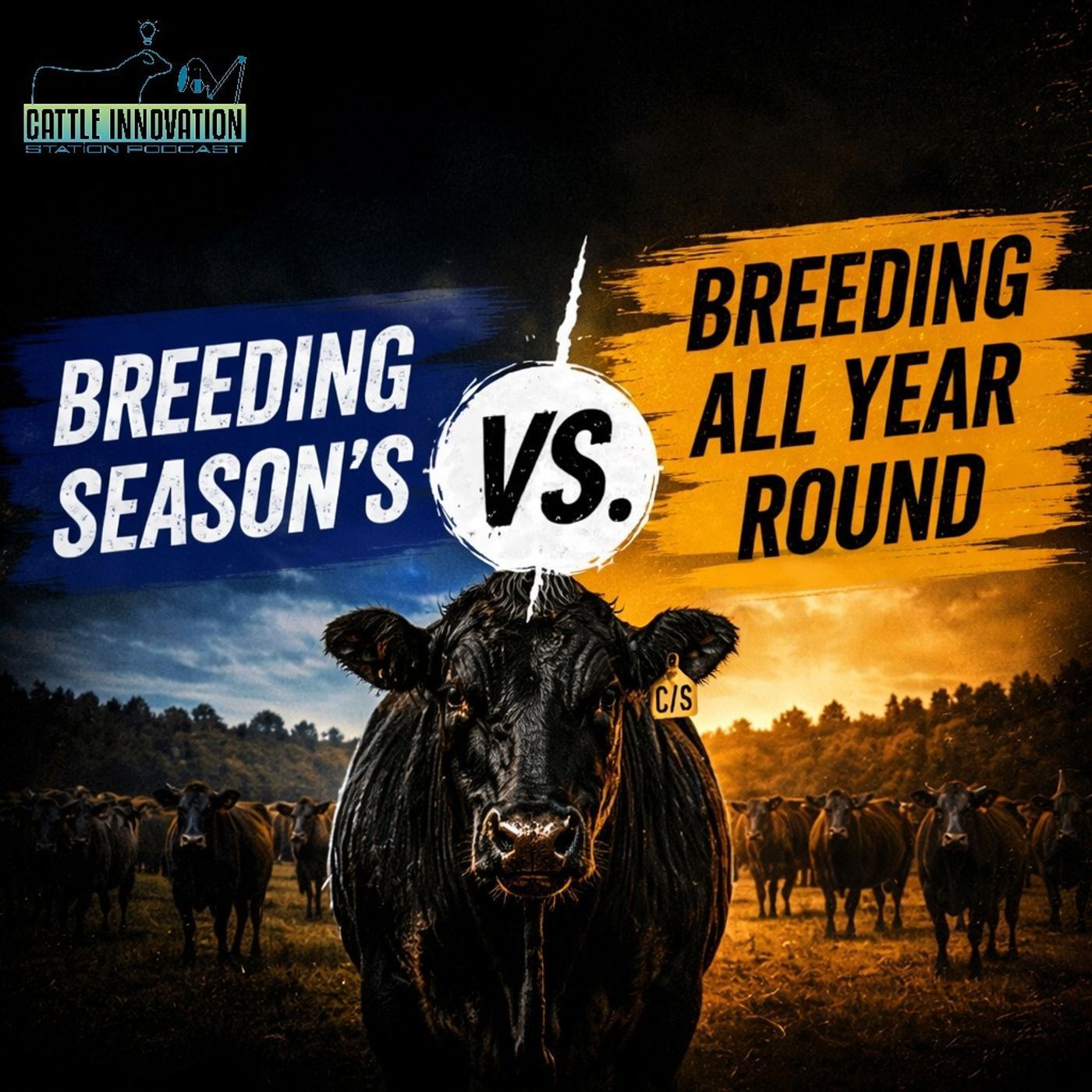
Cattle Breeding Seasons vs. Year-Round: What Drives Profit
About This Cattle Innovation Station Episode
Breeding seasons vs. year-round breeding — which approach actually makes your cow-calf operation more profitable?
Most cow-calf producers breed whenever their cattle come into heat. It's simple, it's familiar, and it might be costing you money. In this episode of the Cattle Innovation Station podcast, Baxter Whitworth continues his conversation with Dr. Joe Mask, professor of animal breeding and genetics at Stephen F. Austin State University, to tackle one of the most debated management decisions in the cattle industry.
Dr. Mask makes a direct case for defined breeding seasons — uniform calf crops, better marketing leverage, easier nutrition management, and more predictable cash flow. But he doesn't stop there. You'll also learn how to manage heat stress during summer breeding, how to transition a year-round herd into defined seasons without losing profitability, when reproductive diseases are silently destroying your conception rates, and exactly when to cull a cow versus when the problem is your management.
If your herd's breeding program isn't built around a plan, this episode gives you the framework to build one.
New episodes monthly. Subscribe on Apple Podcasts, Spotify, YouTube, and iHeart Radio.
Topics covered: cattle breeding seasons, year-round breeding cattle, calf crop uniformity, cattle herd management, heat stress cattle breeding, reproductive diseases cattle, biosecurity cattle herd, culling decisions cattle, cow-calf profitability, cattle cash flow planning, Cattle Innovation Station.
When is a cattle breeding season better than year-round breeding? Defined breeding seasons produce a uniform calf crop that sells better at auction, simplifies nutrition and herd management, and creates predictable cash flow. A 45 to 60 day breeding season also helps identify open cows faster so culling decisions can be made before you've fed an unproductive cow for months.
How long should a cattle breeding season be? Most operations benefit from a 45 to 60 day breeding season. Extending beyond 90 days begins to push calving outside a 365 day window for some cows, which reduces your calf crop percentage and hurts profitability. The right length depends on your technology use — operations using AI, ET, or IVF can often tighten their season further.
How do you manage heat stress during summer cattle breeding? Shade, fans, and reduced handling during peak heat hours are the primary tools. Breeding and AI work in July and August is particularly difficult in hot climates. When possible, schedule breeding activity for early morning and avoid collecting semen or placing embryos during extreme heat periods.
What reproductive diseases most commonly cause open cows? BVD, IBR, leptospirosis, and trichomonosis are the primary reproductive diseases causing abortions, early embryonic death, and open cows. A strong vaccination protocol developed with your veterinarian and a strict biosecurity plan — including quarantine of new animals and bull testing for trich .
Baxter: Well, this interview is not over, but I sure have learned a lot so far and I'm sure you have as well. And if you have, Dr. Mast just talked about having good neighbors and how that's important to the reproductive health of your cattle herd. But how about you be a good neighbor and share this episode with somebody else so that they can gain the knowledge that you have as well. And while you're at it, go ahead and rate this episode ⁓ and this podcast and like this episode if you're watching on YouTube. It's time for another episode of the Cattle Innovation Station podcast, where we keep you current on beef cattle industry events, help you innovate your herd to turn a profit and help innovate the beef cattle industry so we can feed more people on less land. Today I'm interviewing Dr. Joe Mask. Dr. Mask is a professor of animal breeding and genetics at SFA or Stephen F. Austin State University. He's also been a county extension agent and the When do you breed and calve out your cattle? Whenever they come in heat of course. And that might be the right strategy. But could there be another strategy? Breeding seasons? That's what we're going to talk about in this episode with Dr. Joe Mask. Is it better to breed and calve cattle out all year round or should we have specific calving seasons? but we'll get back to the interview. executive vice president of two breed associations. So today Dr. Mask, I'm very curious about the question of breeding ⁓ use in breeding seasons calving seasons or breeding and calving out your cattle all year round. So, ⁓ in an operation, what does a breeding season look like? ⁓ and how is that implemented?
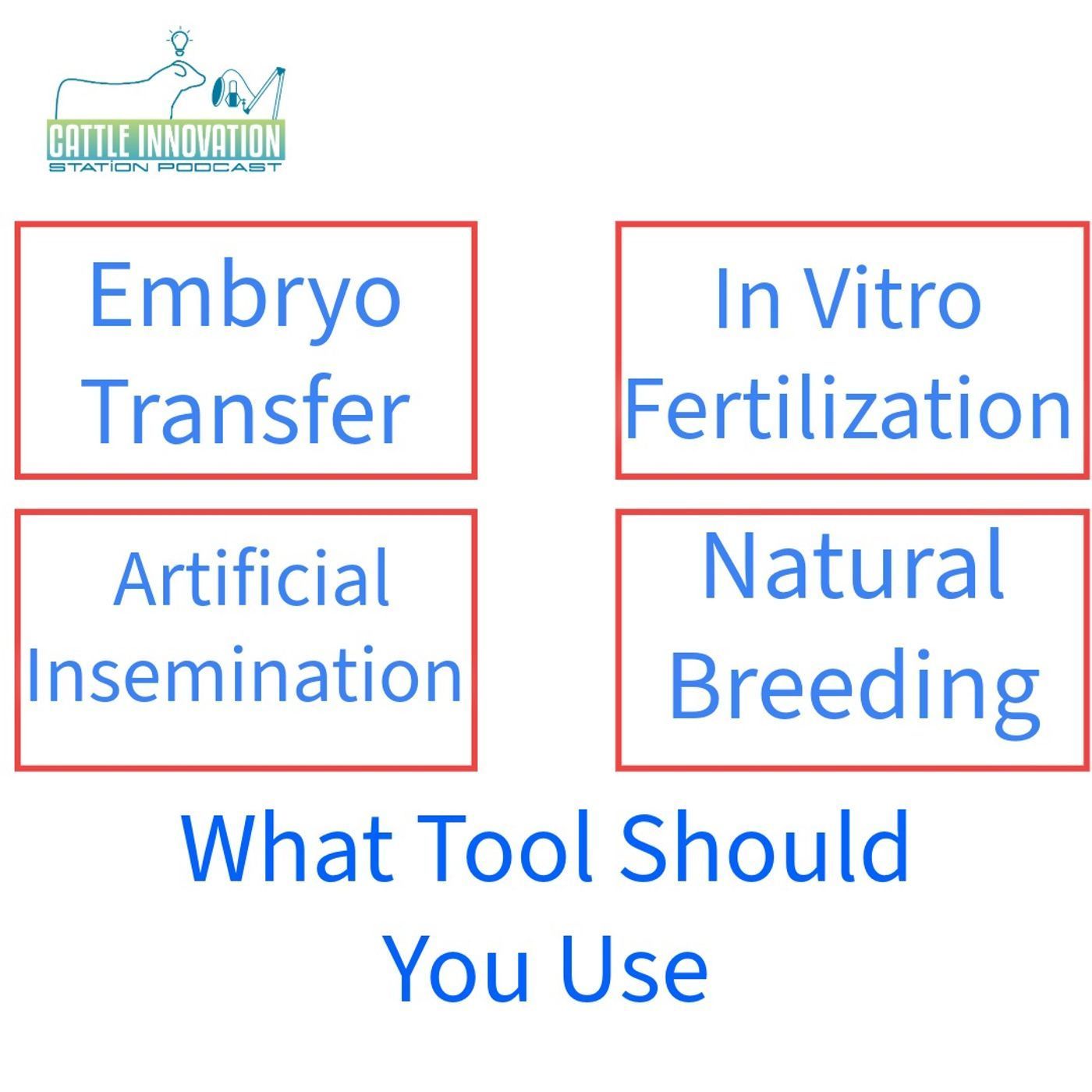
Joe W. Mask, Ph.D.: Good question, Backstrand. I want to start by saying I don't want to step on anybody's toes here, but I am very pro breeding seasons. think that leaving bulls out year round could be some issues and we'll kind of talk through those. But first, if we just kind of define breeding seasons and some of those advantages, some of us have fall breeding herds, some of us have spring breeding herds. Once again, it goes back in my opinion to the marketing of your cattle. market your cattle. Then it goes back to your banker. When does that banker want to see return on investment of an operating loan? And so I think that a lot of times our breeding seasons are determined by that or they're determined by where we're at. Do we have more grass or do we have more forages at certain times of year that makes it easier for us to calve? And so that's when it comes to it. Now the big advantage in my opinion when it comes to a breeding season is we have a uniform calf crop. You know, you can sell your cattle all at one time. You know, you get buyers to come in and you know, we can sell them on video. We can sell them at a local auction more. But you know, they're all handled the same. They've had a good back program, vaccination protocols that you and your veterinarian worked on. You know, they're fed the same. Maybe they're backgrounded for 30 to 45 days. Maybe you also were able to dehorn and castrate all those cattle at the same time You know if you're not using polled bulls, and so that that uniform calf crop I think ⁓ Goes a long way Then I really think it's kind of what I was saying as well as the easing the easiness Or the it's easier. I guess you'd say to manage those cows ⁓ Knowing you know what what? ⁓ parts, know, a reproductive... you know, life in there in, you know, it's easier to manage those cows when we have, you know, cows that are, you know, all breeding in a 60 day period, they're all calving in a 60, 70 day period. You know, it's easy for us to manage those cows. And then it goes back to that marketing as well. I just think if you can, you know, take a load of calves to the sale or a load of calves to a buyer, ⁓ you know, all at the same time, and you get a truckload, you're to get some printing there because I think folks know where those cattle are coming from. Breeding season for me, I like that 45 to 60 days. Some people go 45 to 90, some people stretch it out to 120 days. I think too it goes back to what technology are you using? If we're using some of the more improved technologies like IVF and ET, we can have them all, we put them in recess all at day seven. they're all pretty close and then we put a bull with them, know, not quite 18 days later, 11 days later, then all of sudden all those cows are calving pretty quick. And so, you know, those are those advantages of it, especially having a defined breeding Okay.
Baxter: you have said there is a lot I want to unpack for just a second. So on a breeding season, you talked about the different lengths, but you talked about using two months instead of compared to three months or longer. I think that I would definitely, I understand where you're coming from there and I agree with you because I think that if you go three months or more, you're
Joe W. Mask, Ph.D.: Okay.
Baxter: You can't really breed a cow in her first month after calving. And so those ⁓ second or third month would probably be your breeding season. And if you go any longer than that, then you're ⁓ outside of that 365 day window of having a calf each year, which affects your profitability. other, my question though is on a breeding season, if you, if you breed a cow in ⁓ the beginning of the fall, so September, she will have her calf in around June, right? I'm doing my math, right, June? So that would be, so fall breeding seasons with calf in the summer and spring breeding seasons with calf in the winter. So should you breed in the, the winter and summer and calf in the fall and spring or breed in the fall and spring and calf in the summer and winter?
Joe W. Mask, Ph.D.: You know, think that goes back, Baxter, I think it's a great question. And I think it goes back to, once again, your management style, where you're at, where you're located. know, me personally, I like to start calving somewhere around the 15th September. I like those fall calves being born September, October, and then I like calves being born in March and April. And here's why. Number one, I'm selfish for myself. The thing I to get the of the cold. And that's where our market falls into. People know that we'll have those March, April calves and we'll have September, October calves. I'm not saying that we won't have some Novembers, I'm not saying that we won't have some Mays. ⁓ But that's kind of where we like to fall into play. And then you kind of figure out from that point is when you're gonna market those calves. And so we finished calving in May, we're gonna count six months later probably or five months later. And then we're gonna start, that's when we're gonna sell our calves. ⁓ So I think that it goes back once again to management of knowing what is the lending institution that's holding those operating notes if you got them, when do they want to get paid? And then it's a lot easier for them to know when you're going to market those calves. And so I think that it's going to really depend on what you want. I talked to one individual that said that he likes year-round breeding for one reason. is that he's predominantly sell show heifers. And when all of his good Octobers are gone, he wants to make sure he's got a really good November, December. Because people, they come in there and they see all Octobers, well, everybody's gonna compete against everybody in that breed from him. So he likes to have calves about every month of the year just to kind of fit, number one, his management style, but his class. And so I think that, you know, when we talk reproduction, it's all about that count. But when we talk about when we do it, I think it's all about us when it comes to management and when it comes to, you know, our opportunity for profit.
Baxter: the Yes sir. So that makes a lot of sense. My, guess I have ⁓ one question about the breeding seasons. ⁓ If breeding in the summer, ⁓ how you ⁓ mitigate heat, that heat stress problem? ⁓ And know ⁓ you as well as myself, we raise American cattle, but how do you mitigate the heat stress problem that can affect reproduction?
Joe W. Mask, Ph.D.: Well, I think you've got to look at shade. You've got to look at something about coolness. I think that's why it's really tough, especially where we live is trying to breed those cows or putting embryos in after July 1st. Those July, August ones are even trying to collect bulls for semen. Those animals just don't want to perform in that heat. Now, I'm not saying it can't be done. I'm saying you've got to use some shade. You've got to use some mitigation of that heat. you've got some cows up in a barn or you're trying to to breed one or two show heifers. You've got fans on them, you've got a portico, you've got something to kind of bring that body temperature down that helps you out. ⁓ But try not to get in that situation. You go up north and we're seeing snow in Colorado this week. So I mean, we're in 1st of May, so their days are not gonna get as warm they could be. ⁓ But I think any way that we can mitigate heat with shelter, shade, fans, ⁓ That's a way to get some of those cows bred. Now, if we're trying to put bulls out in July and August, it's gonna be tough.
Baxter: Yes sir, so I said that I, that was my last question about breeding seasons, but I have a few more. ⁓ So breeding seasons, we're having our calves either once or twice a year. But with breeding, with calving all year round, know, you're able to increase that cash flow. So whenever you are using breeding seasons, how do you make sure that can plan ahead because we are in a volatile industry where the price of feed can go up or down or the price of fertilizer or equipment breaks down or ⁓ whatever it is that can affect our input costs. So how do we make sure that we are budgeting for the next six months where we're waiting on the calves from the next breeding season to bring in our next source of income or major source of income?
Joe W. Mask, Ph.D.: You know, actually that's the silver bullet question. You know, because things do change and we are in a volatile society, in a volatile industry. You know, I think that we've got to do a lot of planning. And I think that that's where it comes into, you know, that help of, you know, financial people that, you know, help us kind of maintain, ⁓ you know, our budget. think that, you know, now that, you know, we're having to increase our budgets yearly because like you said, ⁓ fuel feed fertilizer. unbelievable cost. I saw an ad this morning about some cattle that sold back in 1974. was an ad on Facebook. I've got a good friend of mine, Fred Schuetz, what these cattle averaged. The sale was like a million dollar sale back in 1974, but at that time a truck cost you $4,000. I think that what we're seen today is, yeah, we see higher cost on cattle run across the scale or we're selling bulls in production sales, but we're also seeing increased input costs. I think that's where it goes back to. Once again, it goes back to that management side of things. You know, when we look at breeding seasons, we know that we're going to sell calves two times a year. You know, yes, we've got a tighter window on our calves. Yes, we've got more labor concentration just in that certain period of time. But then we've got to figure out that how do we manage that money to move through to that next set of calves are sold. And I think that you mentioned earlier, as we were talking about finding more innovative ways of making money like semen cells. Maybe it's embryo cells, maybe it's, we don't have a calf but we can sell a flush on the cow or an aspiration on the cow to sell. ⁓ And I think it's something like that just a week or so ago. increase that cash flow. And so I think we've got to get innovative today. I think we've got to get really innovative of how we spend money. You know, we've got to figure out how to make that tractor last a little longer. We've got to make sure we, you know, maybe do a little bit more ⁓ forethought and planning to make things go a little better because as we go, you know, that cash flow... Those larger unified groups are going to bring us a little bit more premium, so we've got a little bit more in our pocket at the time. It's more predictable. We know we're going to sell calves today in October. We're going to sell calves in June or whatever. But then that sporadic income hurts all of us. And we've got to make sure that we have, I think in the cattle industry, and I think that you've had guests on here before that have talked about budgeting and talked about how do we stretch that dollar and how How do we have the power if the market goes low again? How do we maintain our genetic herd? I think it's easy sometimes on both sectors, whether you're a cow-calf producer and a commercial side or a seed stock producer, you have got to do something in marketing of your cattle and the genetic and everything we put together in those cattle to make your cattle bring more money. And so what is it about the cattle that Baxter Whitworth has or what is it cattle that you produce that makes them more marketable in the downturn and it makes them more profitable in the downturn. And so I think those are those things that we've got to keep in consideration, especially when it comes to how we put our breed seasons together.
Baxter: Yes, sir. you just, what you just said, putting breeding seasons together. That's my next question. How do you, cause this is the question I've had for a long time. If you have cattle that are spread out across different months, but you want to create a breeding season and a cabin season, how do you group those cattle into a breeding season without losing the time of the profitability of that Heifer or Cal getting bred back ⁓ on time or is that even possible?
Joe W. Mask, Ph.D.: would say it's a slow process. It's a process that's gotta be thought through. And I think you can bring those cows back around. Now you're gonna take some of those cows that, I'm a big proponent of palpation that a cow's not bred and maybe it's a management decision. You move her from the spring to the fall or the fall to the spring and give her another shot. But if you've got a herd that's just broke out. ⁓ maybe you put together a four year or five year plan of how do we bring those cows back together. We sync them up. And I think that that's a ways that we can bring those birds back together to a defined breeding season if that's what we wanna do. But it's gonna take time and you're gonna lose a little bit of profit ⁓ there I think is we're making some of those ships. But I think take the cows that, you can group together and start grouping them together and start working at it. I see a lot of people, Baxter, that lead bulls out year round, and I'm not against them. I'm not against that factor. I like to have that break just so I know when cows are bred, because I can plan more of my nutrition management by doing that. But I know that there's situations that they don't have the capability of doing that. They don't have a place to put a bull for nine months out of the year. whatever. They don't have, you know, cross fences where they can cross fence and put, you know, one set of cows on one place. And so I think it goes back to what are you, it goes back to the number one. ⁓ If you haven't done this, and I tell my students this all the time, you've got to write a set of goals. If that goal is not written down, never, you're never going to reach it. You put that goal somewhere where you can see it every day. And if your goal is to take that year long breeding season and take it down, then what are the mitigating factors that it's going to take to do that? Come up with a goal and stick with it. But if we say we're going to do something and we never write it down, it won't happen, I promise you.
Baxter: Yes, sir. Well, I love what you just said about making goals and ⁓ talking about those factors that play into those goals or as I like to say, the systems that help us reach those goals. But we have talked about reproduction. We've talked about how it impacts the profitability of your herd, how to better how to make your cattle more reproductive and other things about reproduction. But We've talked about management and so one thing about management is reproductive health. ⁓ What illnesses are there that impact reproductive health? How do we prevent those and what are the most cost effective ways to prevent those without breaking the bank?
Joe W. Mask, Ph.D.: I'm going to give you four words, Baxter, and then we're going to talk into it. But I'm going tell you the easiest way to do it. Good fences and good neighbors. We talk about reproductive diseases. Those are probably the two main factors that I look at. But we talk about those diseases, and we could talk about this for three days, because this what lights my fire a lot of times, this BBD or LEPTO. ⁓ IBR, trichomonosis, those reproductive diseases that cause abortions, they cause early embryonic death, they cause open cows, everything under the sun. And we can go in depth in all of them and how contagious they are. ⁓ But I think it still goes back to, number one, that good fence and a good neighbor. ⁓ we can prevent a lot of things. The other things that we have to understand when it comes to reproductive diseases is we've got to have a good vaccination program. I can't stress enough how important it is to have that veterinary client patient relationship to be able to visit ⁓ with your veterinarian, come up with a good plan of how do we reduce those factors of reproductive diseases. Number two, we have got to be so careful and strategic when we come up with a biosecurity plan. If you're buying heifers, you bring them on your property, leave him in a quarantine pen. You buy a new bull, you make sure he's been trick tested. You make sure he's been fertility tested. Yes, I understand it's a law that you have to have non-virgin bulls tested for trick. I'd say test them all, okay? ⁓ But that biosecurity plan needs to be enforced, okay? People coming on your property, people bringing cattle to your property. I consult with a group that had a big scare last year. And I worked with four or five different veterinarians on this. Looking at, because of the reproductive loss and the abortions and early embryonic deaths, trying to figure out where was the problem and it comes back to biosecurity. It's not that I don't like people bringing cattle to my house, but I'm not gonna put them by my production herd. I still do a lot of AI for customers when I'm at home, but they're isolated in their own pen. where they can get around because we even know like BVD is transmitted by saliva or urine or feces or mother to fetus, you know. And so same thing, it's these bulls that harbor trichomonosis in their preputes, you know, that are always have it there. ⁓ so at biosecurity plan has got to be put together and I think you've really got to stick with it. Now talked about the biosecurity plan, the bull testing, you know, making sure, you know, ⁓ there are so many repable people out there that lease bulls. I mean repable people that I would lease bulls from today. ⁓ But I think that you've got to still be careful when bringing other bulls on your place to bring your cows. Okay? And I think that's where it comes into that good fences. ⁓ Because you need to make sure that your neighbor's bulls are just taken care of the same way your bulls are. Because you're not going to see some of these silent killers, especially when it comes to some of these reproductive issues. You're just going to see over and over open cows and abortions. And then I think it comes back to mineral supplementation. What can we do? ⁓ on top of that vaccination protocol to make sure that we mitigate the best of our ability in reproductive health.
Baxter: Yes, sir. Well, ⁓ I think that's very important because like we said, ⁓ health, cattle that aren't healthy, a lot of times are going to have issues getting bread. They cost us money and they also ⁓ aren't making us money. So that's definitely something we have to focus on. But we've so we've talked about a lot of things when it comes to reproduction, but I think here's the culmination of everything we talked about and that is when should we call? ⁓ When when should we call animals in our in our herd? So the first thing that I want to know is when are when do we know that it's it's not necessarily the the animal that we need to call? When are you the problem and not the animal?
Joe W. Mask, Ph.D.: Well, I think, you if you're referring to kind of the management side of things, But the management side of a producer. You know, I think that, you know, we...
Baxter: Yes, or not you specifically. Right.
Joe W. Mask, Ph.D.: You have one cow that's had a calf every year, then all of sudden, one time you palpate her and she's open. ⁓ I think we've got to look at that cow. ⁓ I think we also have to really be very vigilant when we look at if we're using natural service. Did cows not get bred because the bull was down? Did cows not get bred because the bull broke his toe? Did the cows not get bred because he had a genitalia issue that maybe had some issues there? something that maybe we missed. didn't understand that we bought a new bull and maybe he didn't have ⁓ the libido that we thought he would have and that he's not getting out and chasing those cows down to get them bred. And so I think that we have to start looking at some of that stuff. ⁓ Now, if you've got herd of cows and every one of them is in body condition score of six and you've got one cow that comes in for palpation that's using a body score three and a half, Okay, where's the problem? Number one, it's management. We should already brought her up and we should have seen what's going on first. But sometimes we don't do that. And so I think that as we look at those factors, a lot of times it goes back to just, I always say this, all of us today are addicted to air conditioned vehicles. Sometimes we just need to get back on the horse. We need to get back on the side by side and we need to drive through those cows. We need to see what's going on during breeding season. We need to see what that bull's doing. ⁓ But instead what do we do? We drive by the fence and we say, well, everything's still alive and there's no buzzards flying. So everything must be good, right? But then we miss those little things. And so I think that sometimes those are some of the issues why we wouldn't call a cow is in those instances. think there's a lot more instances, maybe when we should.
Baxter: Right, yes sir. So let's talk about that. Because, you know, when we're breeding our cattle, we have the bull and we have the cow, but when is it the cow... When do we know that it's the cow's fault that maybe she needs to be cooled?
Joe W. Mask, Ph.D.: Well, actually, I think it goes back to number one. You've palpated two years in a row, and she's a... Or you see that she's persistently coming into estrus and maybe she's one of those cows that just persistently has an ovary issue or whatever. Maybe there's something genetically, not genetically, but reproductively wrong with her. I think poor mothering ability. Those cows that lay down the calf and then they walk off and leave the cow. The calf, me, Ari, you got cows that are starting to utter up, fixing it. a and they've got about as much milk as you can put in a coffee cup and they will be able to raise the calf. think cows that have chronic health problems, those cows that are hard-renewers, think that FrameScore does a lot or has a lot to do with how those cows perform with what type of forages that we have. so I think chronic health issues are some of those things and those cows just need to go to town. I would tell you that The older I get, Baxter, 20 years ago I wouldn't have said this, but a cow that has a disposition issue now goes to town. Used to, I would deal with disposition issues if she was raising a calf every year. She's little bad, you got her in the pen twice a year, no big deal, move on. Today it's a little bit different. think that age plays a lot of factors into that, is when do you get tired of dealing with that kind of stuff. ⁓ And so I think that you know those kind of issues are reasons really to call that cow You know bulls, know when you got you know, you go to palpate and you know, you got low conception rates You know, what's the issue? You know poor semen test results You know, I've got some folks that that that I work with that Do BSEs on their bulls twice a year once when they pick them up and once when they put them out and one gentleman is told me that he does a BSE on those bulls when he picks them up after they've been in the pen for about 30 days or so, 30 to 60 days, just to make sure there's no problems with them and that he's not feeding them for seven or eight months. And then all of a sudden he tests them to put them out and something's bad. I'm not saying a bull won't go bad during that time, but I think that we've got to be vigilant about those bulls and we've got to be very vigilant about doing BSE testing on them to make sure that those bulls are working to their potential. And then I think that you've got to those bulls when they have an injury. If there's a structural issue, bulls will get straightened or shot in their hocks or start breaking down their pastures. I they can't get up on these cows. I think it's time that we've got to call some of them. But I will tell you that there's people out there that get a lot of longevity out of bulls because they watch them from the ground up when they're born, when they're weaning to their yearlings, to their reanage bulls. cull really hard on structure. And so I think all of those things are when we cull those cows. And the other thing I'm gonna tell you Baxter is that in my experience, don't ever give a cow a name. Because once you give a cow a name, it's harder to cull her. If you give her a number, if it's number two, But what you know, it's easy to take number two and take her to sell one. But when you have to take Beverly to the sale morning, it's a little harder. And so, you know, we have a, we have a deal at our house, which I don't know the names of the head one, uh, cause I can't remember names, but I think that that's one of those things that it goes back to what you said at the beginning and what your podcast is all about. And it's about profitability to be profitable. That cows got to come up with a calf every year. She's got to pay her dues. She's got to be able to afford the country she's owned. If not. It's probably time for a minutes.
Baxter: Yes sir, I love that. If they're not, they pay rent and their rent is a CAF every year. So if they're not paying rent, they gotta be evicted. But I hope the listeners, I hope you all have absorbed what Dr. Mask has said. You gotta be careful when saying this, because you don't always want to let it go to his head. But Dr. Mask is a pretty smart man, so I hope you all absorbed what he said.
Joe W. Mask, Ph.D.: I that, Baxter. And one thing I would say is that if we look at everything that you talked about, and I think like I said earlier, ⁓ how you impressed me and how you talk to people. But I think when it comes to reproduction, it's a system. Management sets the bar, genetics moves the bar, technology accelerates the progress of the bar, and then the discipline really drives the profit. And we've got to be disciplined in every decision we make in reproduction. you
Baxter: Yes, sir. ⁓ I love the talking about the system. I think that's great. Setting systems is how we how we reach goals. ⁓ James Clear said that we don't rise to the level our goals, but we fall to the level of our systems. So I like that. But thank you for joining us. And I hope the listeners have learned something about reproduction. And until next time, keep innovating the cattle industry. Signing off.



 Apple Podcasts
 Castbox
 Castro
 Goodpods
 iHeartRadio
 Moon FM
 Overcast
 Pocket Casts
 Podbean
 Podcast Addict
 Podcast Republic
 Spotify
 YouTube