The Fertility Rule Behind a 90% Conception Herd
About This Cattle Innovation Station Episode
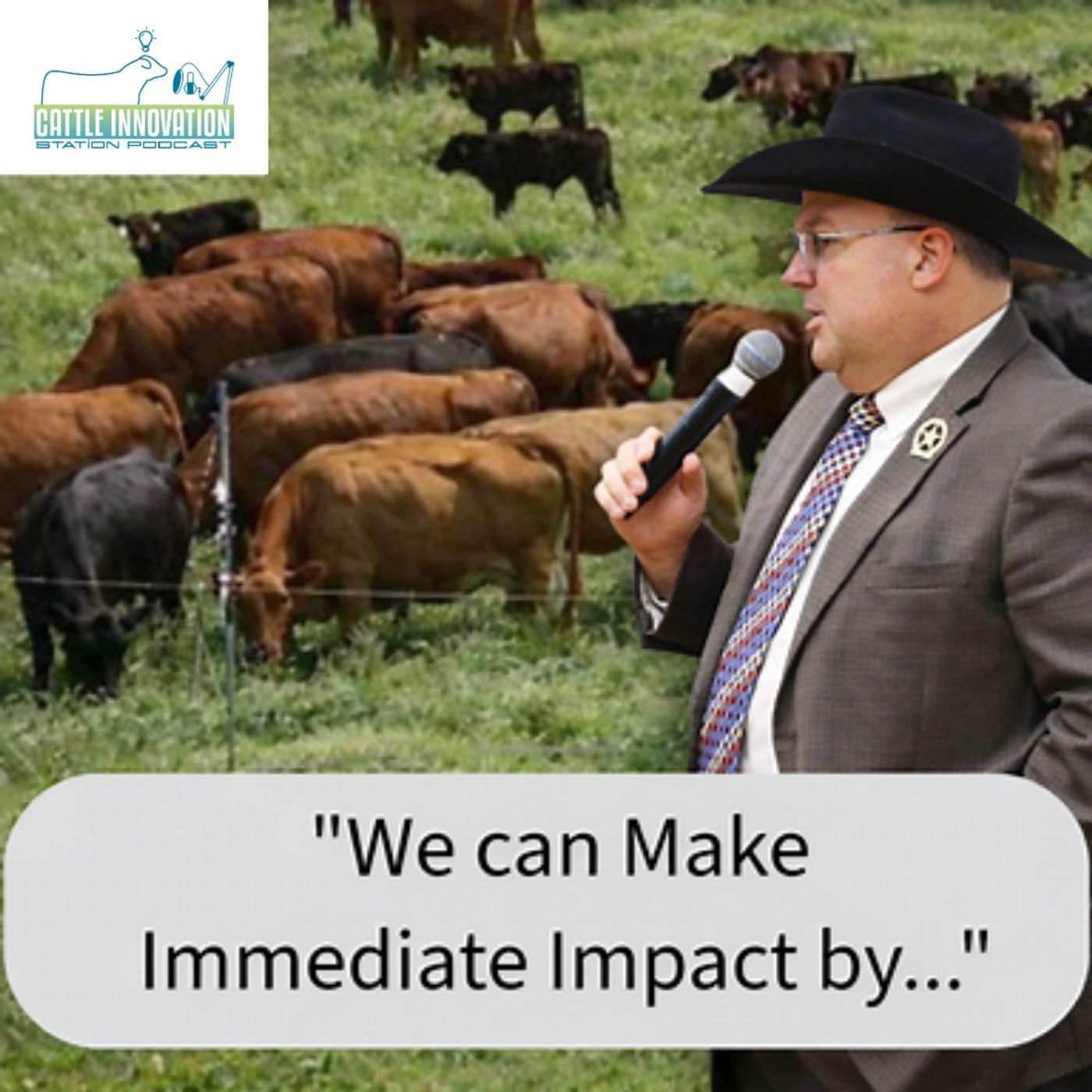
What does it take to hit a 90% first-service conception rate — a number most academics say isn't realistic? In this episode, host Baxter Whitworth sits down with Jarrod Muntford, an AI and embryo transfer technician who sells semen for ST Genetics and runs a monthly NAAB-certified AI course in Stephenville, Texas, to break down artificial insemination, sex semen, embryo transfer, and the fertility standard his own operation refuses to compromise on.
What Is Artificial Insemination, and Why Use It?
Artificial insemination allows a producer to use a bull they could never afford to buy outright across their entire cow herd, breeding far more cows on the same day than natural service allows. Munford explains that a bull can breed 25 to 35 cows over a 60 to 90 day window, while a trained AI technician can breed 100 to 200 cows before lunch — tightening the calving window, increasing weaning weights through front-loaded calving, and cutting the number of bulls a producer has to maintain.
How Does Sex Semen Change the Math?
Sex semen sorts X and Y chromosome sperm cells to produce roughly 90% gender-pure calf crops. Munford recommends using sex-female semen on cows meant to produce replacement heifers, and sex-male semen on terminal-cross cows — since steer calves can bring $300–$600 more at weaning than heifer calves in a terminal program. For seedstock operations selling bulls at a premium over females, the reverse strategy applies.
What Is CSS Certification, and Do You Need It?
CSS certification verifies a bull's health status — including lepto, vibrio, and blackleg screening — through a roughly 90-day quarantine before semen can be collected and sold, especially for international sales. Munford notes the cost runs $800–$1,200, and that skipping it on a neighbor's bull is a real biosecurity risk: an infected bull's semen can cause early abortions across an entire calf crop.
Embryo Transfer and IVF: When Do They Make Sense?
Embryo transfer allows an elite cow to produce 5 to 30 calves a year instead of one, using recipient cows to carry the pregnancies. Munford requires his own donor cows to prove themselves with six calves from six AI services before he'll consider flushing them — he doesn't believe in flushing unproven heifers. He also breaks down the cost and equipment gap between conventional flushing and IVF, and where each tool fits depending on an operation's goals and scale.
The Two-Strike Fertility Rule
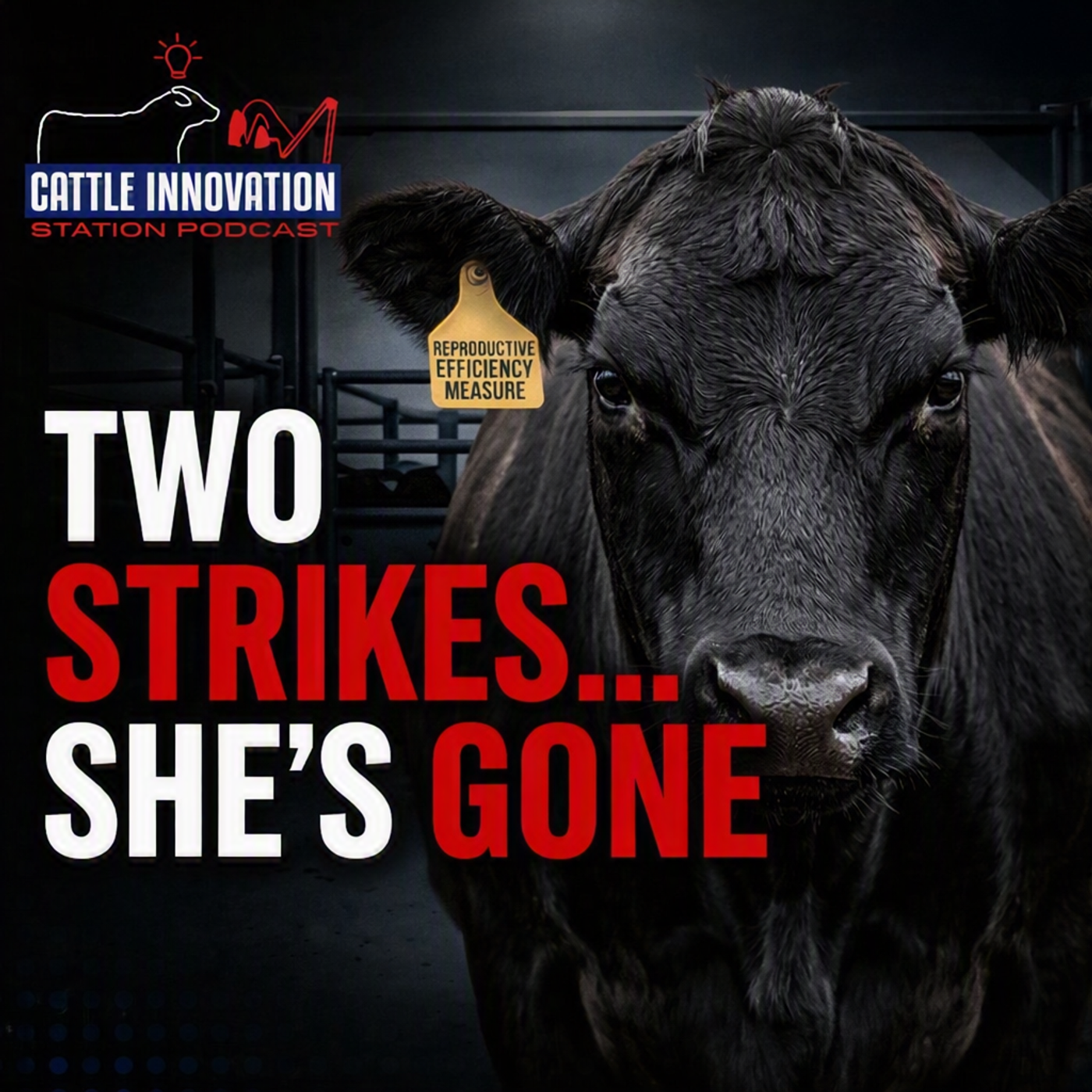
Munford's operation has run 100% AI since 1989 and breeds cows only twice per breeding season. A cow that needs a second service is marked; if she ever needs a second service again in any future season, she and every daughter she's produced are removed from the herd — no exceptions for drought years or "bad luck." The result: a 90% first-service conception rate sustained for over two decades.
Getting AI Certified
Munford runs a three-day, NAAB-affiliated AI certification course every month in Stephenville, Texas, that has drawn students from 47–48 states and five countries. Classes typically book out one to two months in advance.
Key Takeaways:
- A trained AI technician can breed 100–200 cows in the time a bull breeds 25–35 over an entire season
- Sex semen produces roughly 90% gender-pure calf crops, letting producers target replacement heifers or terminal steer premiums
- CSS certification ($800–$1,200) protects herd biosecurity by screening bulls for lepto, vibrio, and blackleg before semen collection
- A strict two-strike breeding policy, with zero exceptions, has produced a 90% first-service conception rate for over 20 years
- AI certification courses run monthly in Stephenville, Texas, and are typically booked 1–2 months out
Baxter Whitworth: home plate, home plate's only 17 inches wide. So we have where we expect our cows to throw that strike zone of 17 inches, and that's in two cycles. If they need a third cycle, they're gone. If they need a second cycle once, that is one strike against them, that one line, it makes an X. If they ever need a second service in any other breeding season the rest of their life, that completes the X, they are automatically gone, along with every daughter that we have in production that already has one line of the X. It's time for another episode of the Cattle Innovation Station podcast. I'm your host, Baxter Whitworth, and today I'm joined by Mr. Jared Munford. We're gonna be talking about different reproductive technologies, how to use those, when they benefit your herd, Mr. Munford, how are you today? I'm doing wonderful. Thank you, Mr. Whitworth, for having me on today. Yes, sir, of course. Well, I wanna start off by talking about artificial insemination. Yes. and it was AI before artificial intelligence became a thing. And so first thing, can you just kind of explain to us what artificial intelligence is or sorry, what artificial insemination is. I messed up now. and how it can be beneficial to your herd. Yeah, so artificial insemination is the ability for you to maximize profitability. in your herd by using a bull that you would never be able to buy financially and to be able to use that same bull over the the gross amount of your entire cow herd and get as many cows possibly bred on the exact same day so they kept early in the breeding season and therefore that should maximize profitability. Yes, sir. So I'm gonna ask a question on related to you said breeding on the same day. My question is If they all if they're all calvin within the same month, can that negatively affect your cash flow? Absolutely, because if you look at where we see weight gain on calves on cows, they average about two to two point one pounds per day of gain on the cow. So if we can front load that cabin seeds and have all essentially bred and born in the first or bred on the same day and then they'll calve roughly in the same week, then that takes fourteen days of breeding and calving out of the window. So you're seeing about a somewhere between a ballpark of a forty to sixty day pound weight gain between one cycle to the next of being able to push those cattle up a little heavier in in that front loading aspect of your cabin season. Okay. So when we talk about the benefits of artificial insemination, you talked about how it can it gives you the opportunity to synchronize your your cattle or your breeding, gives you the opportunity to utilize superior genetics, breed all your cattle. what I guess let's let's move into how how does the artificial insemination process work. So if you look at what a bull can do, a bull can breed twenty five headed cows, maybe thirty, maybe thirty five headed cows over a sixty to ninety day window. Well As a good AI technician, you should be able to breed approximately somewhere between a hundred to two hundred headed cows before lunch. So you're able to breed all of your entire cow herd a whole lot earlier in the breeding season, and then therefore you need less bull power to be on those cows, and you maximize profitability by having fewer bulls, increase weight gain on those front end of those keff crop, and essentially save your bull patter, your bull battery. Yes, sir. And so with utilizing artificial insemination, there's also the technology of sex semen. Can you talk about that for a little bit and what that is and benefits of In that terms kind of goes hand in hand. what we're doing is we're sorting the X chromosome sperm cells from the Y chromosome sperm cells. Therefore what we're able to do then at that moment is sort your keff crop early in a straw. So you're seeing about a ninety percent ginger pure in that straw semen. So your keff crop should be roughly ninety percent gender pure of the sex that you're using when you're coming into AI Breedus Galley. Yes, sir. So when w why what would be a use case that we we would utilize artificial insemination or utilize specifically sex semen? man, right now is the greatest time in the world. we see where the herd rebuild is coming. It hadn't really officially started in most of the areas, but some guys have already started on it. So you take those cows that needs to give you replacement heifers and you use sex heifer semen on those. And then the rest of your cows are basically either placeholder cows, they are terminal cross cattle to keep your catch flow going in. And those you would be breeding with sexed male semen. We understand that the sexed male semen or this the male calves at weaning. Bring somewhere between three to five hundred, maybe even six hundred dollars, depending on what week we're looking at market over the past year. So if you're able to get an additional five hundred dollars on those steer calves over a heifer kiff on those cows that are terminal crosses, and be able to get all of your cows that are supposed to be giving you replacement heifers to actually give you a replacement heifer versus a steer kiff, then essentially that's money in the bank. Yes, sir. So and then that works vice versa, also if your main sale is Heifer calves. Correct. Yes, sir. Or if you're raising bulls and you're selling bulls and let's say you're getting fifteen thousand dollars to twenty thousand dollars on an average on your bull c on your bulls in your production sales, a sea stock operation, but yet your females are only bringing eight to ten thousand, if you can maximize and get a few more bulls in that, then you're you're just again putting more money in your pocket. Yes, sir. So if someone is wanting if they have a bull that they want to buy semen on, How do you go about that? How do you make sure that the semen's quality enough for your operation, meaning that it's likely enough to take that it's gone through the necessary test? and also vice versa, if someone has a bull that they want to sell semen on, what would they what would the steps be to do that? So essentially we're looking at two different angles here. First angle would be looking at a a genetic supplier, whether that be your top semen companies or that be the ST genetics, whether that be ABS, whether that be Select SIRES, whether that be Gen X, those top four breeders or those top four genetic companies. And now you have bulls in STUD that they're collecting semen on consistently. ST genetics is who I sell semen for. And what they do is they're the parent company that has a sorting technology to sort the semen through their parent company sexing technologies. And they've already done all the background information. They're sending you essentially a pregnancy and a straw. And the question is, is you maximizing that pregnancy? with the cows that you have and the way that you manage your cows. Your other question from the back side of that question, the other part was if you have a bull that you want to collect semen on, there is collection facilities as you can take that bull to, you drop that bull off, you get him collected, they make straws out of with that ejaculate. And then you come back into your cow herd and then you breed to that to that same bull and then that allows you to to actually use the bull that you want versus a bull that maybe they have on a in a collection facility or a stud company. And then you have those options as well. Now you can actually get that semen sorted too, but it's a little lengthier process. especially if you want that semen to be CSS certified, which is kind of the benchmark on the the health standards that that bull has to go through in order to be sent nationwide or international. and it's just basically a a ninety day quarantine period with health papers going in and going out, looking at tighter levels for lepto, vibrio, black leg, all them other aspects. It's just kind of a little bit of rough thought process on what it goes through to be CSS certified. Yes, sir. And on the collection side, we would be remiss we our s we have one of our sponsors, Elgin Breeding Service, so I would like to mention them as well. also So you mentioned the CSS testing. Could you talk about the pros and cons of those different or of get being ha of having CSS testing on your s on your bull semen if you get collective? So if you trust your neighbors, then you probably don't have to have CSS. But let's say that the neighbor that you trust, let's say he has a bull that jumped the fence that belonged to his neighbors that had left over. Or trick. He come in with a trick, he jumped the fence, bred some cows. That bull his bull that you want semen off of has come back in and bred that cow. Now your bull has trick. Well now that that bull has trick, they would catch that in a CSS test. So basically that ninety day quarantine is just guaranteeing that the health of that bull comes in. We understand that if that bull has a very high level or totter level of lepto or vibrio that that is going to pass through a semen. So he's going to inseminate a cow through AI. And then that ranch starts dropping calves in an abortion aspect way too early due to the fact that that semen that was frozen in that ejaculate had a higher than normal titer level. So essentially what we're looking at is delimiting those titer levels, getting those tighter levels down below the threshold that they should be prior. To freezing that semen. So if you're really concerned about the biosecurity of your hat of your herd, you really need to make for certain that all the semen that you're purchasing is CSS certified. If you like your neighbor's bull and he does and it's not CS certified, then that's a chance you take. But as far as a producer who has a bull that wants to get it tested and go through CSS and that quarantine, it's going to be a ballpark of a $800 to $1,200 price tag to get that CSS certified. certification long before they ever drop collect a single straw semen for that particular bull. So it there is that ninety day quarantine aspect that they have to go through. Yes, sir. Yeah, I'm using that phrase ninety days kind loosely because quite frankly I've never had a bull go through CSS certifications. I'm just kinda giving you a you know kind of a what to expect even though those numbers may not be exactly accurate. Right. Yes, sir. and s so Also would like to add, if you don't mind, that CSS tests and you did mention this is required for international sales and so required for international if you want to go into Europe, it's even a a step above that. So the bulls that are in the Europe barn never go back home. They stay in the Europe barn and if you're going to work at a facility where they have bulls that go to Europe, That's a first in barn, so you go to the Europe barn and then you can go check the other balls. But if you went to the other barn, you can never go back to the Europe barn unless you change your boots, change your clothes and all that kind of stuff. That's a little bit more of a quarantine isolated barn. Gotcha. Yes, sir. so I would like to move into now talking about the benefits of embryo transfer. Okay. So just like we did with artificial insemination, could you talk about what embryo transfer is, the benefits of it, and then also why you yourself might recommend it over IBF because you are a conventional embryo transfer technician. So it's another tool in the toolbox. So a cow can give you one birth a year essentially unless she has a random set of twins. So what can what embryo transfer does is it allows you to maximize and recover more embryos from a cow or make more embryos of cow and then you're going to transfer those into surrogate cows or what we're going to say in the industry a recipient or a recep cow so she's going to carry another cat another cow's kef as it's hers. So what that allows is that your elite cow your number one cow instead of giving you one kef a year she gives you five ten fifteen twenty thirty calves a year instead of just that one. So it allows you then to really move t the front end of your cow herd forward and use your back end set of cows to do it. Yes, sir. So as far as conventional flushing compared to IVF, those are both tools in the toolbox. Both have their place, both are good. And both have a different expense on the front end as far as using it and as far as the different expense as far as the equipment that you have to have to do the work. So the reason I stay in the conventional concept is today you're looking at probably a half a million dollars to above that to have all the the incubation equipment, all the additional ultrasound equipment in order to pull those oocytes, put those oocytes in a maturation media, get those embry those oocytes to become an egg, deposit semen on them and do all that in the incubator. So where we do conventional flushing, what that does is all that's got in the cow, we give her a series of FS eight shots to get her to superovulate and she'll ovulate that entire dog follicular wave that entire follicular wave will be ovulated within a eight ten twelve hour fifteen hour window we have semen in that cow at that time of ovulation through AI processing. and then she'll ovulate that entire follicular wave. Then we go in there with some flush media and basically flush her entire uterus clean and catch all those embryos in a in a filter and then decide then the quality the stage and if we have recepts ready at that moment we can transfer them fresh. If not they get frozen for later use. Yes sir. All right so just like with the artificial insemination, what are some use cases for this? when when would you utilize embryo transfer? So I'm one of those guys that I'm a firm believer in fertility. We want to maximize fertility. So when we find that cow that's five, six, seven years old, it's never missed every single time that you ever AI her, she's sticks first time, every Those will be your candidates that you'd probably want to use first. I am not a believer that just because you like that cow as a heifer that she should be flushed, I feel like we need to make for certain that that cow is going to be productive member of society and bring you in profit before we need to flush her. But that's just my personal opinion. There's a lot of guys that flush virgin heifers. There's lot of guys that flush heifers that have that have really have never proven their self in the real world scenario and that's fine. but to each their own on that scenario. But I'm at our operations our house, she has to give me a minimum of six calves in six straws of semen in six years before we'll ever debate about fleshner. I want her to prove herself first. Yes, sir. So what about operations that don't utilize artificial insemination as heavily as your operation does? And we'll talk about that a little bit more in a little bit, but for some that have a mix of both live bulls and artificial insemination. Does it still just six calves in general or I don't know if those if embryo transfer would be a tool that would be in their toolbox. if they're not really forward progressing, forward progress and being aggressive with where they're going in their genetics. they may not want to be doing embryo transfer. So if they're still using heavily on bulls and doing very little AI work, they're probably not going to be as aggressive enough to want to get into the embryo stuff because that's a little more lucrative, a little bit more roll of the dice than what just AI work is than compared to bulls. So if they're primarily doing their first service fully AI and moving forward trying in the progressive world then they may want to be doing a real transfer, but a lot of these guys are pretty much just bull breeding. It's probably not going to be their best option. They can get somewhere a whole lot faster with AI. Yes, sir. So but for people that use a mix of both, say you have three natural calves and three AI calves, which to would total up to six, would you still say six those six calves would still be meet that marker to go ahead and flush that cow? truthfully I don't know if I would yet, but you I don't know if it it goes back to how many times in my opinion that she missed with the AI program. if you had to breed it two or three times and if she finally stuck with the bull, I'm probably already would have pulled that cow out of my herd completely and and not even try to AI or do an embryo transfer on her. So I really want to see those cows in my operation be as fertile as they can be before we ever try to use any kind of embryo transfer on those cows as far as them being a donor cow. Donor cow being the cow that we're gonna pull the embryos out of. Yes sir. When I said natural sorry I meant they chose to breed them naturally and chose in not that they missed on the AI. No if they if you can tell that they've kved out in the first twenty one days every single day of your life, as far as every breeding season. They always say on the first service even with national service, then absolutely you could try that. But I would definitely be making for certain that we're keeping accurate records and be able to isolate which female that is compared to those that are missing second cycle or catching second or catching third or catching fourth cycle. And it's kinda harder to do that when you don't know where they are. with the bull breeding program because the bull doesn't come in and tell you what day he bred her. You're kinda either waiting on an embryo or a waiting on a natural calf to be born or you're gonna have to be following her up with an ultrasound and know exactly how far along that cow is in days to know whether or not she w stuck on the first service or didn't stick on the first service based upon the number of days that bull's been in. Yes, sir. Well thank you. So it The next thing I'd like to talk about, so we here on on our podcast, Cattle Innovation Station, my goal is to help Cal Calf producers, both seed stock and commercial producers, be more profitable. And so I believe that something that is innovative for my operation might not necessarily be innovative for you because I think that something that's innovative helps you be more profitable. So when should you utilize artificial insemination, sex semen? embryo transfer or even IVF and when should you maybe just do a conventional or a a natural when when sho when should you naturally breed a just do a natural breeding or whatever it is you're utilizing in your herd. I think a lot of that kind of depends on where your goals are. your ultimate end goal is and if we can't define what our ultimate end goal is then we really don't know where our start is. But as far as producers that are trying to capitalize financially in this market, we could definitely be AIing. I'll probably tell everybody to or I do tell everybody to to use conventional semen for two or three years, find out where your baseline is on your conception rates before you ever start doing any kind of AI work as far as with sex semen. So use your conventional semen with with AI until you find that baseline. And once you start increasing your conception rate due to management and better management, then you can play with sex semen. If you want to dabble with sex semen at the very beginning, it's probably going to be pretty heartbreaking on you. moving from there, the next tool in the toolbox. Would be to start doing embryo transfer work. So I think that we we see them as a set of tools that are that are layered. And I think the first layer would be AI with synchronization with conventional semen. Once you're very successful with that, then add in sex semen once you're seeing very good success on that. And then you start isolating those cows that you really want to build your herder on. Then start doing embryo work on those. IVF is a really cool tool because it does allow you to use pregnant cows versus open. cows and it does allow you to get into those cows every two weeks versus with conventional flushing you flush your twice per year essentially flush you twice put it back in calf flush your twice put her back in calf kind of a scenario or IVF allows you to do that every two weeks until that Pregnant fetus is beyond the pelvic shelf and you can no longer pick up those ovaries. So somewhere that's usually around 90 to 100 days pregnant before you can need to stop doing IBF and wait until she kills out again. Yes, sir. So there's two things I want to break down there. First of all, I really liked where you said if you don't know, and this is not exactly word for word what you said, but you said if you don't know where your goals are. you don't know where your starting point is. I think that's very important. could you talk about that for a second? Understanding like or understanding where what your goals are and then kind of finding your starting point. So if we understand where we're sitting at as far as what a shotgun can do in a scatter scatter gun type of approach and those the those that shot being you know really wide in comparison to where you're shooting a rifle with an open sight compared to where you're shooting a rifle with a scope, kind of dials in where you're going in life. So whether if you've got that scatter gun approach where you're just kind of shooting in a general direction, compared to where you're actually dialed in behind the scope and you're looking very long term, very visionary, and you're thinking and and seeing where you want to be and then start breeding towards that while simultaneously calling your outside cows or in that kind of a scenario in the future putting embryos in those cows that are on the far outside so they'll give you a cat that actually fits your vision. Yes, sir. And then the other thing I want to talk about is you said that you what you kind of said there was kind of going stages. So you went from a natural service to AI to also incorporate an embryo transfer, possibly IVF and other technologies. And you talked about kind of the production when we're talking about actu the actual numerical cattle side of it, understand our conception rates. from a financial side, can you describe continuing to grow in that aspect and how you do that because these technologies can be expensive to utilize. So how do you do that as well? If we really look down at it as far as cost breakdown and what you're getting from your vet's office and as far as your pharmaceutical drug that you're purchasing, you're looking at a ballpark between seventy five to one hundred and twenty five dollars a head to do your AI work. So if you really compare where that bull is on breeding cows, you're gonna spend ballpark if you're having it hired out and you're let's just ballpark it at $100 bill on 20 head, $25, you're at $200 $2,500. that bull's gonna cost you a minimum ten thousand in today's market for you to get an average or bottom end of average bull. fifteen to twenty thousand dollars for a higher end bull. But if we're using AI on top of that, we're probably getting bulls that are sixty hundred, two hundred, four hundred thousand dollar price range. some of them even pushing towards a million dollars as far as where they where they sold at as far as the value that somebody put on those bulls. So for you to be able to breed the same number of cows as what that bull can breed twenty five head for essentially twenty five hundred dollars, that's in hiring it all out, that's a whole lot cheaper than where you would be if you actually had to go out And buy that bull. And there's a whole lot of years that you can breed without having a bull that you're using AI before that bull ever starts getting in the same ballpark as far as cost comparison. So at the end the day, AI is actually a whole lot cheaper if you really sit down and actually do the numbers on it. Yes, sir. Well, but moving you you kind of explained a ladder there a second ago, moving through that ladder, how do you grow and afford that? So I think a lot of it goes back to understanding where we are as far as w today and where your goal is in the future. If we look at the cow herd that we have in today with the lowest number, we we're gonna have to do a herd rebuild. So we've got to take those better end in cows that we want to build that herd around, maximize those daughters and build those daughters and increase this whole number of those better end daughters while still being able to cash flow that development with your other cows that's not quite as quality in in genetic value or in what they can bring to the table. Yes, sir. All right. So I when we're talking about utilizing these technologies, how do you so with embryo transfer, you don't really know how many embryos that you're gonna get. So how do you budget for something like that where you might not know where exactly how expensive it could be. it's one of those things that we have to sit down and know kind of what total cost should be and be ready to throw it away. Okay. if we're not ready to throw it away, we're not there yet. So if we understand that a flesh may cost you five hundred fifteen hundred dollars or eight hundred two thousand dollars If we're not ready to throw that money away on a failed flush, we're not ready. So it's one of those things that you've got to say build that cow herd around a said cow or a couple of cow families and say, okay, now I'm ready to to put this money out and say if I lose it, I'm okay. and I always kind of use the the the concept of it is known where we are in AI, it is known where we are. synchronization it is no normal are a sex scene you are going to Vegas when you start playing in the engine you may hit a jackpot you may be consistent in every time you go to Vegas and you may lose every time you go to Vegas so you've got to be able to lose that amount of money and be prepared to lose it in order to say yes we're ready to try. And the guys don't think of it like that. They think it's a guaranteed win every time and man, a in a conventional flush thought process and a conventional flush work, a third of the cows that we flush never make it injury. Really? So and then the average is five to eight on a conventional flush. So some cows will produce ten and above and those are the cows that I try to isolate when I'm looking at new donor cows. I wanna make sure that those cows give me ten plus. And the dams and grand dams both give me would would have given the previous owner or the current owner ten plus embryos per flush before I ever start saying I wanna buy that cow. So I think there's a lot of like mother, like daughter. in that fertility standpoint, a cow that flushes a lot, so did her mother and so did her grandmother. And likelihood so our daughters. So I want to make for certain that when I'm picking out a new Delma cow that I can find that data, I can see that data and know that they're gonna cooperate for me and work for me. Give me the best percentage chance when we go to Vegas. Yes, sir. So I just want to talk about what you said there. Basically if You're you're saying when it comes to investing in a technology like embryo transfer, if you cannot throw that money on the ground and burn it, and your operations still be okay, then you shouldn't be then you shouldn't be investing in an embryo transfer program. Absolutely. also you 'cause you just said one third of conventional flushes on a cow don't Make an embryo. Okay. So a third of the across the nation, a third of all new donor cows coming into the donor battery never makes any real. That's a pretty significant number right there. So again, like mother, like daughter, if you know that the cow that the cow's mother and grandmother flushed good, likelihood that she will is pretty high. But if they were below average on that five to eight average per flush So will so that particular cow. And another thing I want to point out, and this applies to IVF as well, is well, actually that only applies to the IVF. On the IVF side, just because a cow makes a bunch of oocytes, does not mean that they're gonna make a bunch of embryos. And so the only number that really matters there is how many embryos that they make. So we see about a forty-two percent conception. on the embryos that she makes by actually making a a viable pregnancy. So which is even a little bit lower than where we see about a fifty percent on conventional on those embryos that we make and whatever. So it's a kind of a still again, you know, it's a crapshoot. But you can load the dice in your favor by knowing the genetics and understanding the genetics prior and you know in her family pedigree. Or going to Vegas with no doted dice and taking whatever you get. So if you can kind of see what those cattle look like and understand the history of those cattle then you're you're going to Vegas with loaded dice and that's where I'm where I want to play the game. I want to play the game where the odds are in my favor. So that's why I'm very cautious about bringing in new cows to our operation and use for donor cows because I want to be able to see that they're that they have a pedigree of good quality donor cows. They're going to produce produce they're going to make her and then we can play around with what we want to do. Yes, sir. So when we're talking about these cattle that are producing well when we're you know if it's if it's a heifer or a cow a a cow that we that might not necessarily have had the genetics on that cow before we bought that heifer, bought her as a heifer, or we just never flushed her her her parents or any of her lineage, how can we guesstimate that she might produce well? There's no guesses. No guesses. No guesses. It it's a crapshoot. Maybe you win, maybe you lose. And that's why I'm saying it's really important that you're able to take that money that it's going to cost you and just throw it away. Because i if you can't afford to burn it, then it's you're not ready for it. And that's why I do like knowing a little bit more about those cows that I'm going to buy or knowing about those cows that I currently own. To know which ones are going to work and which ones are not going to work. And the cows that are going to work is the one I'm gonna maximize. And then I wanna put my money into that basket because I'm expecting higher returns. It's not any different playing stock market. You wanna put your money on those that are gonna give you a higher return than those that's gonna give you a lower return. Right. So so we you talked about throw being able to willing to throw that money away, but when we set the budget for our embryo transfer program f for this particular heifer or for this particular cow for the next month and say she produces more embryos than we're willing do you do you need to be willing to throw those away also? You can't. You can't because you're gonna get invoice for those. So let's say that you're expecting that cow to give you eight if she gave you fourteen. You're paying for all fourteen of them because they got they collected them. So you can't throw those away. You're getting billed for Just better be able freeze them and use So what happens? how do you make sure that something crazy doesn't happen where you can't where you can't afford to pay that invoice? yeah, you you just gotta be prepared. Yes. And and know where you're gonna be at on a range, know where the cow's gonna be at on a range as far as where our lineage is and our pedigree and and say here's the money I've got to set aside for it. Maybe it works, maybe it doesn't work. And if it works, great. And and honestly there there's a set cost on these embryos to produce. that really doesn't move a whole lot. And then you get in a conventional method and that's gonna be your jogs that you use, your equipment that you use, the tube and the you know that and then what you're gonna pay your embryologist to do it. And then you get paid per you get charge per embryo that's collected on top of that. So you you've got to be able to afford the set cost and then you've got to be able to afford the the adjusting cost based upon a total number of emeralds you make. So it it's it no no two flushes are the same. So I guess the bottom line there is it's much better to be very over prepared than even just a little bit under prepared. And that's why I tell guys if you've never flushed this cow before, don't set up any reset cows. Because either she's gonna give you none or she's gonna give you a lot. And you don't want to spend the extra twenty five, thirty, thirty five dollars on setting up these recep cows and get these recep cows synchronized with your donor. And then she gives you none. Or then she gives you way more than you need. So until you kind of have some consistency in that particular donor cow on a conventional flush method, I'm not setting up any recip cows. I'm on to just do flush and freeze until I have a ballpark idea of what she's gonna do. And typically within two or three flushes you've kind of got her dialed in and know what she's gonna be doing for you. Yes, sir. And after you get them dialed in, then then it's pretty pretty much consistent. I've got a couple cows at the house that I know every time that we flush them, I'm on average fifteen embryos because that's what we're gonna 50 embryos on five flushes. I know where she's gonna be, I know what's gonna go on, and it's very consistent from then on out in conventional flushing. Not as much in IVF, a little more variation, but still a little bit of consistency even within that, just a little bit wider consistency. Yes, sir. So going back to talking about embryo transfer, a question that just popped up in my mind. You said that you utilize F S H follicle stimulating hormones. and I know there is some debate about that. So on on your side of the debate utilizing it, what's your what's your take on FSH? So I think it's a drug that that works really well in the right circumstances and when used correctly. I think it can be over think it can be abused and what I mean by abused is when we really don't understand that cow and we overstimulate that cow then she gives us no embryos. likewise we use it a little bit with the IVF world just not as aggressive. We're gonna give that cow roughly anywhere from thirty two to thirty four milligrams over a four day period with a set of on a donor cow. which is kind of on the normal side. you look at Holsteins you're gonna be a little higher. You look at some of your English cow you may be a little bit lower than that. Younger heifers maybe a little bit lower. But it's definitely a a tool that we've got to have in the toolbox in order to get that cow to ovulate that entire follicular wave in order for us to utilize it. All right. So So I think we can go ahead and move on to talking about getting AI certified. And so one of the problems with AI is the labor cost that it can have. and so can you talk about maybe the benefits of getting AI certified? So we do we do an AI certification course every month. We hold those in Stephenville, Texas. it's a three day course. the National Association of Animal Breeders, the NAAB, requires twenty four hours of training. so that's why we do a three A course to to fulfill that NAAB affiliated certified type level of co level of requirements in our course. So we teach those every month. We've had students from forty seven, forty eight states, all across the United States, including about five countries that have come to Steamville, Texas to to get certified. and it's one of those things that it teaches you all the tools that you need to have in the pullbox in order to go home and be successful. but please understand that even though you're successful in the breeding program, it really goes back to your ability to manage those cows for three hundred and sixty five days. managing those cows that entire year for one straw seamer. And the question is did she take or did she not take? So either she got bread or she's open. So there's a whole lot more that goes into getting that cow pregnant versus just the day of breeding. There's a lot of management that goes into that. So we teach that cour that course accordingly because I think you need to fully understand that that's roughly a 365 day management course. So That's kinda the way that we approach ours. And we chose to approach it like that simply because we knew that there would be some people that would come in that would struggle with it. Wanted to thank us for the the knowledge and the experience but struggle with it going home and really just wouldn't go home on a plot. they would still hire their their breeder that was breeding for them. So we wanted to make for certain that they understood what it took to be very successful in that program. And it goes really back to that full year round CowCAF management program. So you talked about your course of getting AI certified, and the course that y'all have every month. How would somebody could you elaborate on how somebody would go about getting AI certified? Absolutely. it's one of those things that's pretty easy, just reach out to me. I need contact information so I can get a hold of you in case something happens, whatnot, put you in your class roster. But I also need payment up front. So typically those guys will pay up front to secure their seat in the class roster and they may be paying me for a class four, five, six, eight months out, or they may be paying me for the more on this the next available opening. So we typically are always somewhere between one to two months booked out. So currently our August class is full. Our September class is alm is almost full. We do have a way for October and December class. So it's just pretty easy, just reach out to me and and I like to vis be able to visit with people. We have guest speakers that come in and speak at our dinner. So if I know a little bit about you, a little bit about your program on the front end, then I can kind of pick and choose the speakers that's gonna best fit my audience that I have in that particular class. So I may have mainly college students in a class that's trying to either resume build or or learn something other on the front end while they're going through college. I may have some producers that are just really starting out and I may have some producers that's been in there for you know, that's been second, third, fourth generation ranchers in that class. So I try to make for certain that I ha kind of a have a good feel for every class going into the class. So therefore I can tailor those speakers towards the the bulk of that class to get everybody an option they're interested in. Sounds good. so you in your braiding program, could you talk about your breeding program? 'Cause the way that you Do your breeding program specifically is pretty interesting. It is, it is. You know, I've always been told that if you'll just do all the ordinary things, this the little ordinary thing is extraordinary, eventually your whole program becomes extraordinary. And that's where ours has become. so let me take you back to about the middle of the nineteen fifties. in our area in Wise County, everybody had a small dairy, and my mom grew up small dairy we dad group in small dairy. And my dad's parents had somebody come out and AI their hosting cows. So through a buyout here and buy out there, I mean everybody's kinda sold out of the dairy business in our area and everybody's kind of burned back to beef cattle like they were prior to the dairy side. So so that takes us from nineteen fifties to about the the late nineteen eighties. My dad and my grandmother were sitting there at the kitchen table and my grandmother looked at my dad and said, We're gonna start AI our beef cattle My dad said, okay. And Grandma and Dad said, Well who we are we're gonna hire somebody to do it? And grandma said, No, we are. We'll do it ourselves. Dad said, Okay. So they brought out a a dairyman that was able to AI and brought some reproductive tracks and set on the tailgate and he showed how to do it. Then they went and bred a cow and the dairyman left and never came back. So grandma and dad said, Well, sink or swim. So Day was a little bit of sinking, but anyways we ended up swimming. So that was nineteen eighty eight. We started AI our own cattle. Nineteen eighty nine lady grandma decided that we were good enough that she wanted to either say, We're going to do this and we're not gonna have to be able to rely on a bull. So Grandma sold the bulls. So we we've been a hundred percent AI since nineteen eighty nine. So there's some lot of hardships. We learned a lot of things throughout the years, some failures, some successes, and just built on our failures, built on our successes and and learned a lot of things and next thing we know we turned around around to as I was getting into college in the early two thousands, late nineties, early two thousands and And we added synchronization to our program. By that time I was doing a a lot of the breeding. I started breeding in middle school and was making some pregnancies in late the later the latter years of middle school and in the high school. But as we come as I was in college, we started adding synchronization to it and really had honed in on s on fertility and chasing a little bit of fertility and started achieving success that was a little bit, you know, on the outside of the belt range. So we started achieving mid eighties and then bumping into the nineties, the next thing I know we're we're 90% conception on first service. Like like academia tells you this is not possible. We're doing it. So take you back to where we are today, 25 years later, we're still 26 years later. We're still hitting a 90% conception rate on first service. We we missed that mark in the eleven drought. We missed that mark in the twenty three drought. We were still in the mid eighties in those two years. we started dabbling a little bit with sex semen in two thousand and seven. had those heifers born in two thousand eight. It was exactly what they said it would be, a little lower conception rate at that time with that rude and crude and very young and new technology. But man, they've got that sex semen technology so dialed in right now that we're matching our conzi our conventional success with sex semen. We're seeing a ninety percent success or a little higher with where we are with sex semen. the last four years we've been exclusively sex heifer semen, rebuilding our cowherd. In Utero currently, we have a hundred percent sex male semen in and very pleased with what we're now we didn't get a hundred percent conception rate, but you know we ended up using a hundred percent sex semen on that first service. We dabbled like a fifty-fifty of blend between sex male semen and conventional semen on that second service and got all of the cows bred. But as far as where we are in fertility, we only breed our cows twice. If they need a third service, they're gone. So if you look at home plate, home plate's only 17 inches wide. So we have where we expect our cows to throw that strike zone of 17 inches, and that's in two cycles. If they need a third cycle, they're gone. If they need a second cycle once, that is one strike against them, that one line, it makes an X. If they ever need a second service in any other breeding season the rest of their life, that completes the X, they are automatically gone, along with every daughter that we have in production that already has one line of the X. So that's kind of how we run our cow herd as far as our virgin heifers that are br that we're breeding. if they breed on the first service, then they are eligible to be replacement heifers and their daughters are eligible to stay in the herd. If they breed on the second service, then they are a hundred percent terminal cross type cattle and we will never keep a daughter out of them if the mother did not sit on that first service. Yeah, it's pretty hard, pretty rough. but you know, that is the strike zone we expect our cows to match and and they are doing it because we set our bar to that level. So we called some cows out that wasn't successful and and kept chasing fertility and and said if they're not fertile, if they're not settled on the first service, they gotta go. So that means that our cattle really have to fit our environment with to make sure that they stay dialed in in order to be there. And through that, we get everything that we want. So we're chasing the fertility hard. And we're hitting about an eighty to eighty-five percent prime carcass on all of our steer calves right now. And that's through Charleston State University. they do all of our crash-year plate program as far as processing it there. So not only do we have really good carcasses, we have really fertile cows. So most people say you can't have your cake and eat it too. no, you can, but you have to chase fertility in order to get it. Wow, that's that's amazing. That's a lot to unpack there. first of all, I want to point out that the consistency and the the the values there that y'all have. I'm actually gonna have a quote from I believe Mr. Aaron Alejandro that says, when your choices are or when your values are clear, your choices are easy. Absolutely. And so I think that's a great a great example of that right there. I do have a question though, and that is how do you determine if if a cow doesn't take and say maybe how do you determine if there was something that maybe wasn't a genetic issue, it was actually more of it was just a bad year or something. there may maybe a external factor. There's no bad years. There's no external factors. We fenced in the parade. The buffalo do not run. Everything is built around bar bar. You have to know what grass you have in your field. You have to know where your grass sets. If your grass are not meeting your nutritional needs, you are bringing it to them in the future. There's no there's no rut rows. Either you plan to succeed or you plan to fail. One or the other. So it's consistent everyday management, watching what's going on, reading your cattle, reading your grass, reading your manure, reading your soils, and making for certain that you are on track on par. we don't wake up and say, Oops, I missed. And and I I see this issue arising when we're breeding heifers is they're like well they're 200 pounds too light I'm s you know I it was a bad year. No, no. we weigh our our replacement heifers every 30 days. We know the date that they we weaned them. We know the weight they were when we weaned them. We know the weight we expect them to be when we breed them. Now it's really simple. It's a math for you know. They're writing him every 30 days. Are we on target or are we missing it? Are we on target or are we missing it? And it it it's it's not a the the we don't it's not an excuse if they don't like it. It's an automatic pass or fail. We did everything right. We did all the ordinary things, extraordinary, to set her up for success. Now, did she or did she not do it? Now, I'm gonna come back and I'm gonna say maybe it was her fault. Maybe she has a cystic over. Okay. So she didn't cycle like you wanted her to. She's three or four days late. Okay, great. being the fact that I'm able to palpate ovaries and find out if she's cystic on the ovaries, I'm going in about three or four days later, five days later if she hadn't come and eat. And I'm checking her for cystic overs and periodically find some in that situation. If but if I don't find a cystic over in that scenario, she's gone to town. I mean I don't be We're trying to raise a a ball club, essentially, that everybody does their job. All of our cows are employees. I gave every one of these cows what they needed to do their job. If they didn't do their job, they don't need to be here. Imagine what happens if you're company that you're working for or the business that you are all of your employees are firing on every single cylinder. You don't have a single person slacking. Everybody's doing what their talents that God gave them to do, they're doing them at their fullest potential because you gave them what they needed to do it at their fullest potential. So that's the way you have to look at it. You have to do all the ordinary things extraordinary. So I I think that's amazing, but I am going to ask the question that I think a couple people are asking in their head listening. And that is a lot of this sounds like a lot of labor intensive tracking. How do you how do you do stuff like this if you're on a if you're trying to grow on a large scale. how how do you how do you track all of this? And like you mentioned weighing every thirty days. That can be a labor intensive process. What that's only labor intensive when you don't have your cows trained. So our cows when they calve will walk down the chute when we feed and the feed straws are on the front end of the chute. They walk down the chute, go through the chute, right down the other way, right out the front to go get feed. Every single time. You don't give your dog a treat and then ask it to do a trick. Right? Right. You tell it to do the trick. And when it does it, you're ordering with the treat. So all of our cows are shoe trained. Now is that hard? Maybe, maybe not. So let me ask you a question. Okay. You own twenty thousand dairy cows. Okay. And cows come to the sho to the milking parlor twice a day, three times a day, right? Right. So how hard was that? Probably w probably not too terribly difficult. So it goes back to us looking across the aisle at our dairy counterparts and saying, What can I learn from them? What are they doing that makes them super successful in cattle handling and cattle management? And how can I take some of those concepts and apply that to my beef cattle operation? So we can all learn from each other and I'm still learning. There's a lot of things I don't know. So I'm sharing what I do know. Right. And I'm still trying to be average of the room or the dumbest person in the room when I step into a room of people because I want to get educated myself. So they said if you're the smartest person in the room, you're in the wrong room. Right. So I'm still looking for those rooms to learn something. I'm walking into a room looking for nugget of information. We're sitting right now here at the Beef Couple Short Course at Texas AM. Why? For a nugget of information. For a new thought, a new idea to take home to apply to our operation to make us better, right? So we've gotta be lifelong learners. And when you've got bigger operations bigger than you, right across the aisle, go visit, go ask questions, go look. So can you do it on a bigger scale? Absolutely you can do it on a bigger scale. Mark Gardner's got like forty two thousand acres in Ashton, Kansas, and they got 4,000, 5,000 head of mama cats. They AI everything twice. Cleanable go on those and they only keep replacements from those that were AI. If they can AI 4,000, 5,000 head on 42, 45,000 acres twice, give me somebody bigger that can't do it. Give me a will for show or how's the saying go? If there's a will, there's a way. Yeah, if there's a will, there's a way. So to all if you're an ASAIN, it's you gotta get out of your comfort zone. And success starts when you step out of your comfort zone. Learning starts when you step out of your comfort zone. Yes, sir. So not only not only do you have to learn from those bigger operations, not only do you have to learn from the dairy industry, but I think you have to learn from be willing to learn from other industries in general. you talked about managing and tracking your goals. I think that's something that we can learn from other other industries that are constantly tracking sales, constantly tracking their ad turnovers. I mean they're they're tracking everything. And so I think we we can learn from other industries as well. And I think that's very important. Absolutely. Well, I understand that you you run a very unique operation. but I think in what you do, it's probably not gonna be for a what a a lot of people, what their goals are, what necessarily the technologies that they they might still utilize AI, but maybe not in the same way or as heavily that you want to do them. But I definitely think that we can all learn about tracking our goals, or tracking track tracking what we're managing and also making sure that the technology that we do use is helping us be more profitable. something that you mentioned at the beginning of the interview. And also just making sure that our can conception rates are high because at the end of the day in the cow calf industry, if our conception rates are low, so is our profit. in fact it's probably negative. So I I think those are important things that we can take away. And if you're interested in getting AI certified, make sure to contact Mr. Munford. We'll also try and get your contacts in the show notes. While you're in the show notes, go ahead and follow this podcast and share it with somebody else if you learned something, which I'm I'm sure you did. We've we've heard some pretty cool and unique perspectives that have definitely get your mind thinking on new ways to do things. And so, I hope that you've listened or enjoyed this episode and until next time, keep innovating the cattle industry. Signing off.

 Apple Podcasts
 Castbox
 Castro
 Goodpods
 iHeartRadio
 Moon FM
 Overcast
 Pocket Casts
 Podbean
 Podcast Addict
 Podcast Republic
 Spotify
 YouTube